Dream Travel 2.0: The Future of Exploring While You Sleep


You close your eyes. Minutes later, you awaken not to the sound of your alarm, but to the vibrant sounds and spice-laden air of a bustling bazaar. This isn’t Marrakech; it’s ancient Babylon, thousands of years in the past. The next night, you find yourself on a space station orbiting Jupiter, watching the colossal storms rage across the gas giant. This isn’t a virtual reality headset. This is sleep itself.
Welcome to the concept of “Dream Travel 2.0.”

In a world where traditional travel is bound by time, money, and the laws of physics, humanity’s final, limitless frontier for exploration is its own mind. For decades, science fiction authors and futurists have toyed with the idea of controlling our dreams, turning them into a conscious realm of exploration. Today, rapid advancements in neuroscience, artificial intelligence (AI), and brain-computer interfaces (BCIs) are transforming this fantasy into a startling possibility.
But what exactly is Dream Travel 2.0, and how does it differ from what we might call “1.0”—the simple act of lucid dreaming (being aware you are dreaming)?
Technology as the Dream Architect

Lucid dreaming is an unstable and unpredictable experience, relying entirely on the individual’s own mental effort. Dream Travel 2.0 aims to augment, stabilize, and direct this process with technology. This future tech is envisioned to stand on three main pillars:
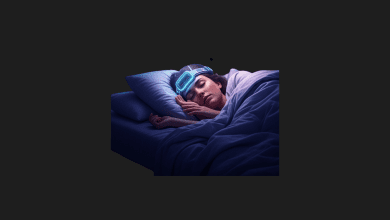
- Advanced Brain-Computer Interfaces (BCIs): Today’s bulky lab equipment will be replaced by sleek, non-invasive wearables (like headbands or smart pillows) that can precisely read your brainwaves during sleep, especially during the REM (Rapid Eye Movement) stage. These devices will “read” your dream state, your emotional responses, and even your conscious intentions.
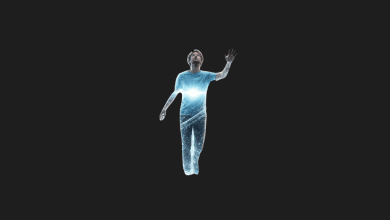
- AI-Powered Generation: The brain data collected by the BCI will be processed by an AI acting as a “dream architect.” When you form the intention, “I want to stand on top of the Eiffel Tower,” the BCI detects it, and the AI provides the subtle cues—perhaps through auditory signals, haptic feedback, or gentle neural stimulation—to help your brain “render” that experience.
- Biofeedback Loops: To make the experience sustainable, the system will prevent the dream from collapsing or turning into a nightmare. If the system detects a rising stress level (e.g., a rapid heart rate), it can intervene to calm the dream environment, alter the narrative, or gently guide you out of the experience.
Beyond the Boundaries of Sleep: Potential Applications

The promise of this technology extends far beyond simple tourism or entertainment:
- Education and Skill Acquisition: Imagine learning a new language by practicing it in a fully immersive simulation of ancient Rome. Or consider a surgeon rehearsing a complex procedure dozens of times in their sleep with zero risk. Sleep could become an active learning ground.
- Therapy and Mental Health: For patients struggling with PTSD, phobias, or anxiety, this could be revolutionary. Guided by a therapist, a patient could safely re-process traumatic memories or confront fears in a controlled, completely malleable dream environment.
- Impossible Exploration: We could “travel” to places the human body cannot withstand: the deepest trenches of the ocean, the event horizon of a black hole, or even Earth as it was billions of years ago.
The “Inception” Paradox: Ethics and Challenges
Like any revolutionary technology, Dream Travel 2.0 brings with it a host of profound ethical questions and potential dangers. The most obvious is the problem popularized by the movie Inception: What happens when the line between reality and the dream world begins to blur?


- Addiction: Could people become “dream addicts,” preferring to escape the problems and limitations of the real world for their perfect, controllable dreamscapes?
- Data Privacy and Security: There is no data more personal than your own thoughts. Who would control this “dream data”? Could corporations serve you advertisements in your dreams? Or worse, could your dreams be hacked?
- Accessibility: Will this create a new digital divide, where only the wealthy can afford to buy fantastic experiences, while everyone else is left with “natural” sleep?
Waking Up to the Future
For now, Dream Travel 2.0 remains largely in the realm of speculation. But the foundational technologies that compose it—BCIs, generative AI, and neuroscience—are advancing exponentially.
Perhaps in a few decades, the wish “sweet dreams” will no longer just be a pleasantry. It will be an itinerary. In the future, sleep may not just be a passive period for the body to recover, but an active frontier for the mind to expand, learn, and explore.
You Might Also Like;